Skip to content
DIAMANT VERSATILE

DIAMANT VERSATILE

Diamant Bytyci is an artist and interior designer working between Paris and Brussels. His practice unfolds at the intersection of interior architecture and collectible design, where objects and environments are conceived through the same spatial sensitivity. Trained in interior design, he approaches furniture not simply as functional elements but as structural presences within a space. His work investigates the dialogue between material, proportion, and atmosphere, exploring how objects contribute to the perception of interior architecture. Drawing from both classical references and contemporary minimalism, Bytyci develops compositions defined by sculptural clarity and restrained elegance. Solid woods, bronze, aluminium, and tactile textiles frequently appear within his work, selected not only for their visual qualities but also for the way they shape light, weight, and presence within a room. Through careful control of geometry and proportion, his pieces often evoke an architectural sensibility where furniture becomes a continuation of spatial thinking. Whether through monumental silhouettes, balanced structures, or subtle material contrasts, his work reflects a sustained exploration of form as a language capable of shaping both objects and environments.

Across his practice, furniture becomes a way of extending architectural thought into the realm of objects. Each piece is conceived not in isolation, but as part of a broader dialogue between space, material presence, and atmosphere.

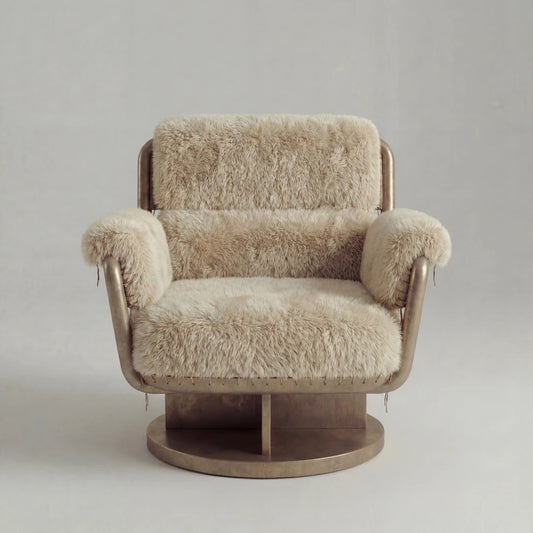
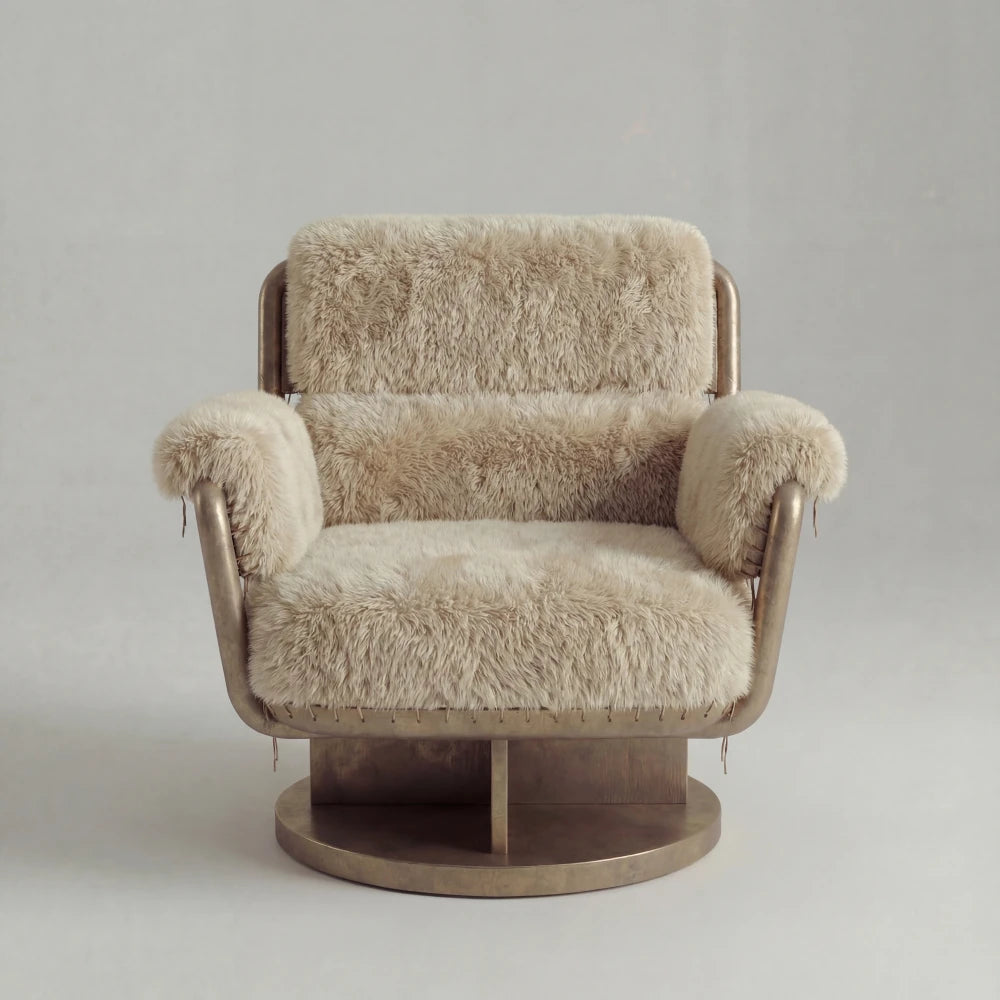
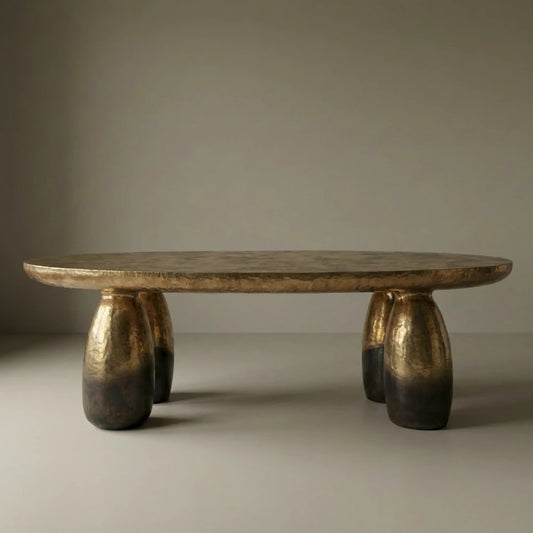
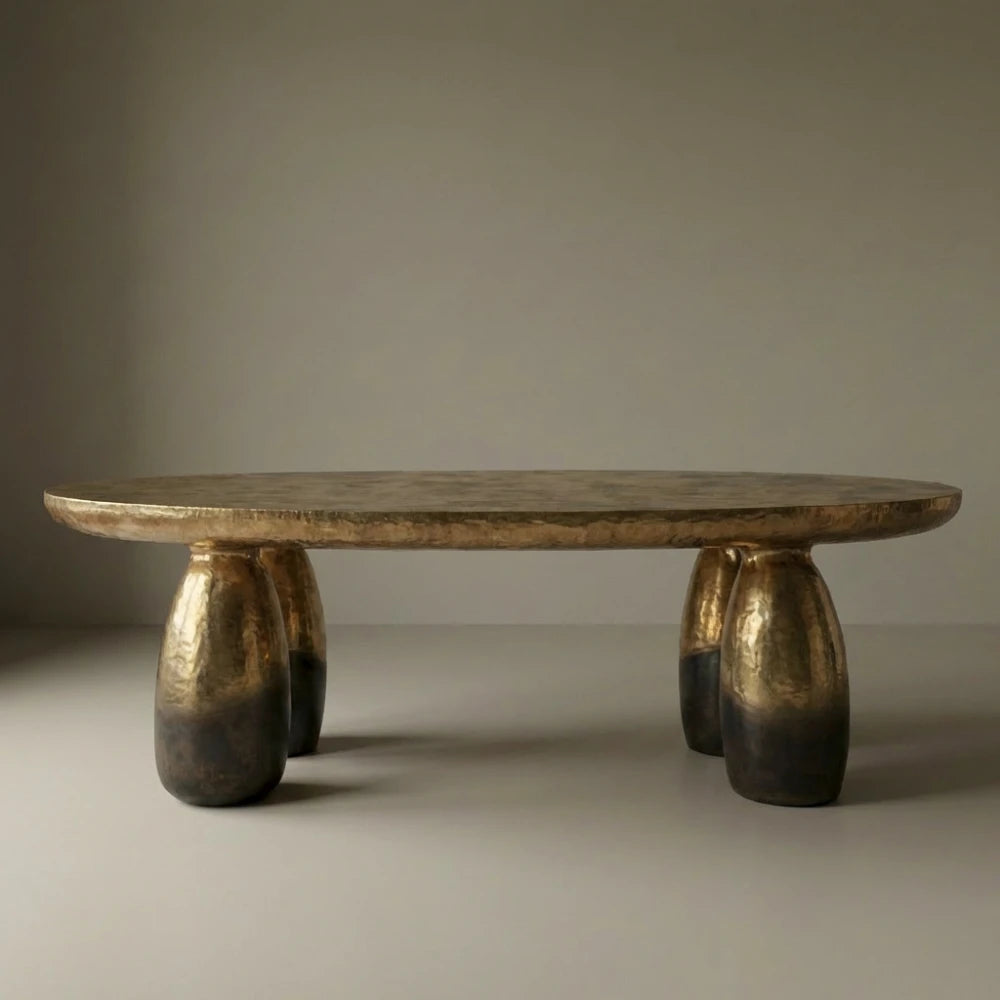
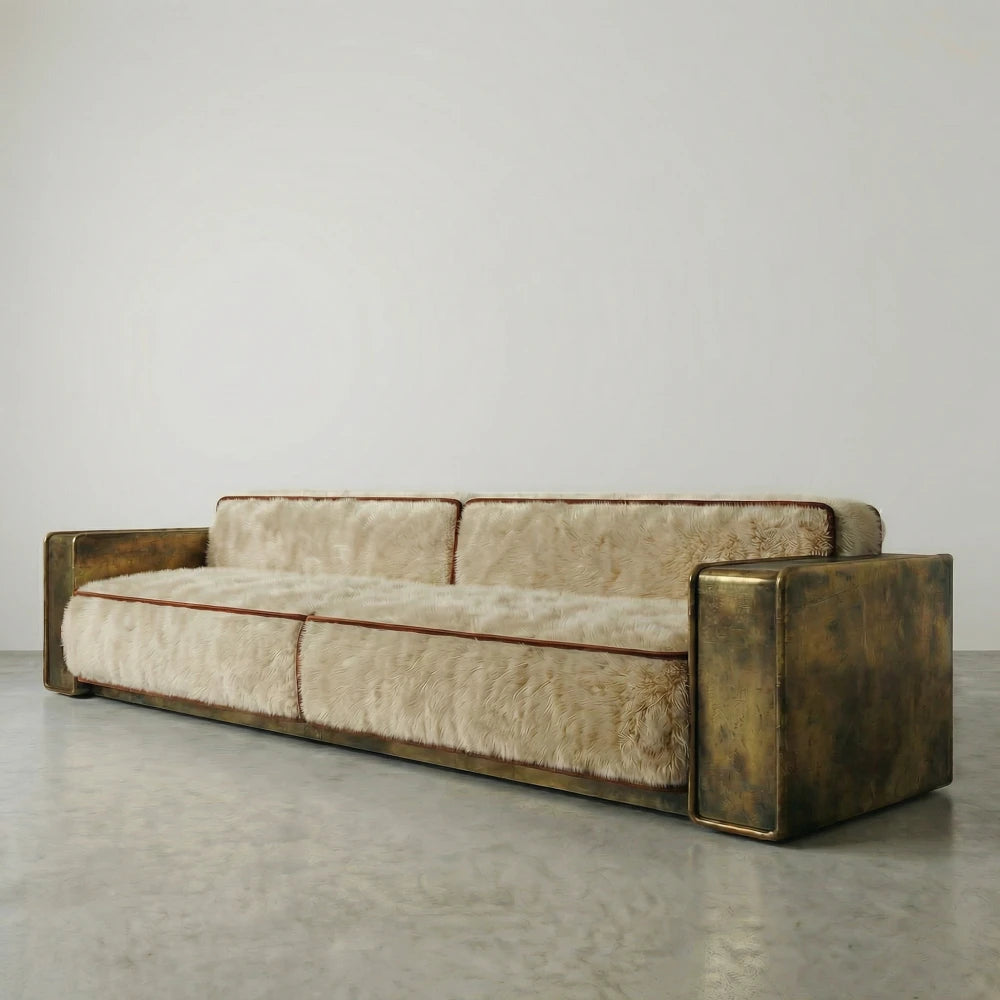
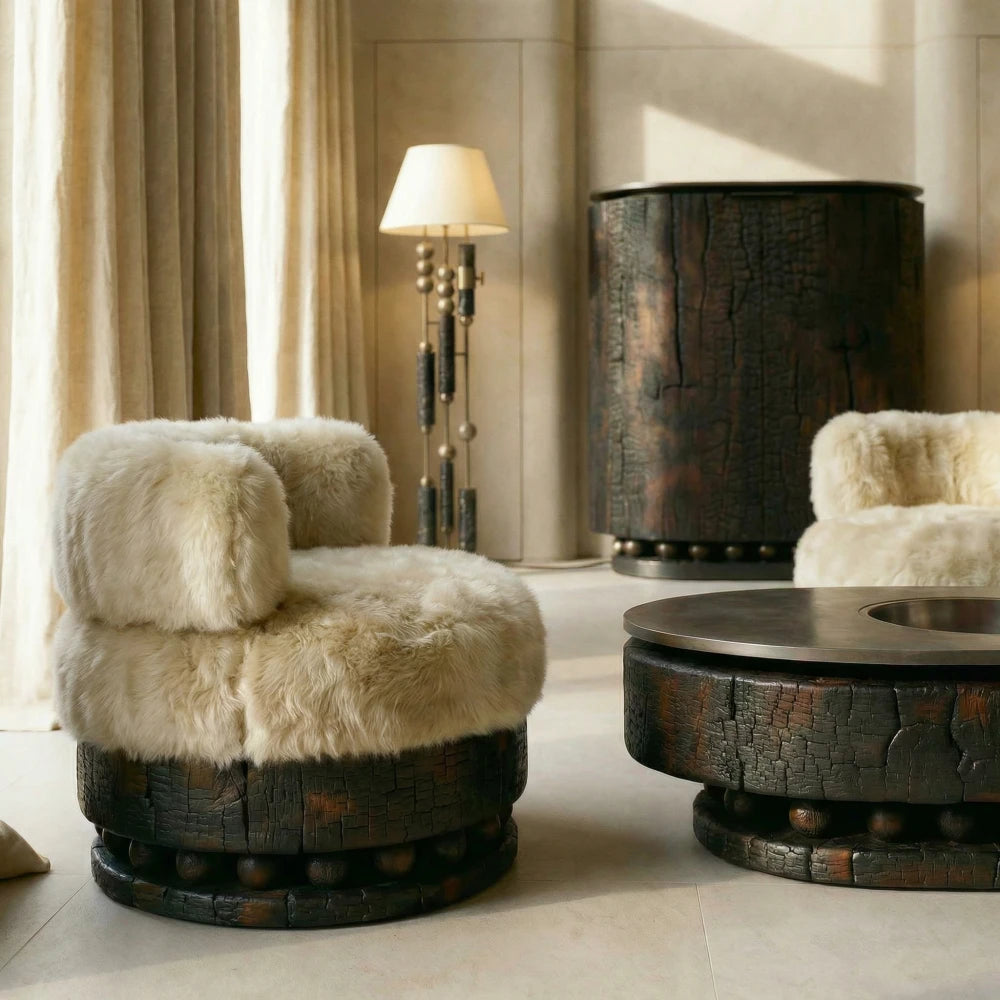
This perspective is visible throughout collections such as Héritage, Cendre, Solum, and Ritual, where materials and forms become central to the construction of each piece. Charred oak, patinated bronze, brushed aluminium, and walnut appear alongside tactile surfaces such as shearling or mohair, creating a dialogue between raw structure and sensory softness. Many works are produced in limited editions, reinforcing the notion of furniture as collectible objects situated between functional design and sculptural presence. In certain pieces, such as the monumental bronze tables of the Solum series or the elongated aluminium structures of the Vépra sofa, the emphasis lies on weight, proportion, and material density. Elsewhere, softer compositions explore atmosphere and tactility, introducing upholstered volumes and curved silhouettes that bring warmth to architectural interiors. Across these projects, Bytyci continues to investigate how furniture can occupy space not merely as equipment, but as a form of spatial expression. His work ultimately reflects an ongoing dialogue between art, design, and architecture, where objects are conceived as lasting presences within contemporary interiors.